We are not forest experts. Our fascination with the forest began when we noticed the rapid decline of the white ash trees in our region. We learned to identify ash by the symptoms of infestation, rather than the healthy appearance of the species.
This is a relevant way to learn our landscape today, because the modern forest is defined by collapse. The compounded onset of insect predators, illnesses, and blights transported across the globe by humans makes this moment distinct from naturally occurring disturbance cycles.
We had to be startled into looking. Despite the tragedy of deterioration, seeing the complexity of our ecosystems brings incredible joy. Our research methodology is rooted in humble observation, often spurred by loss.
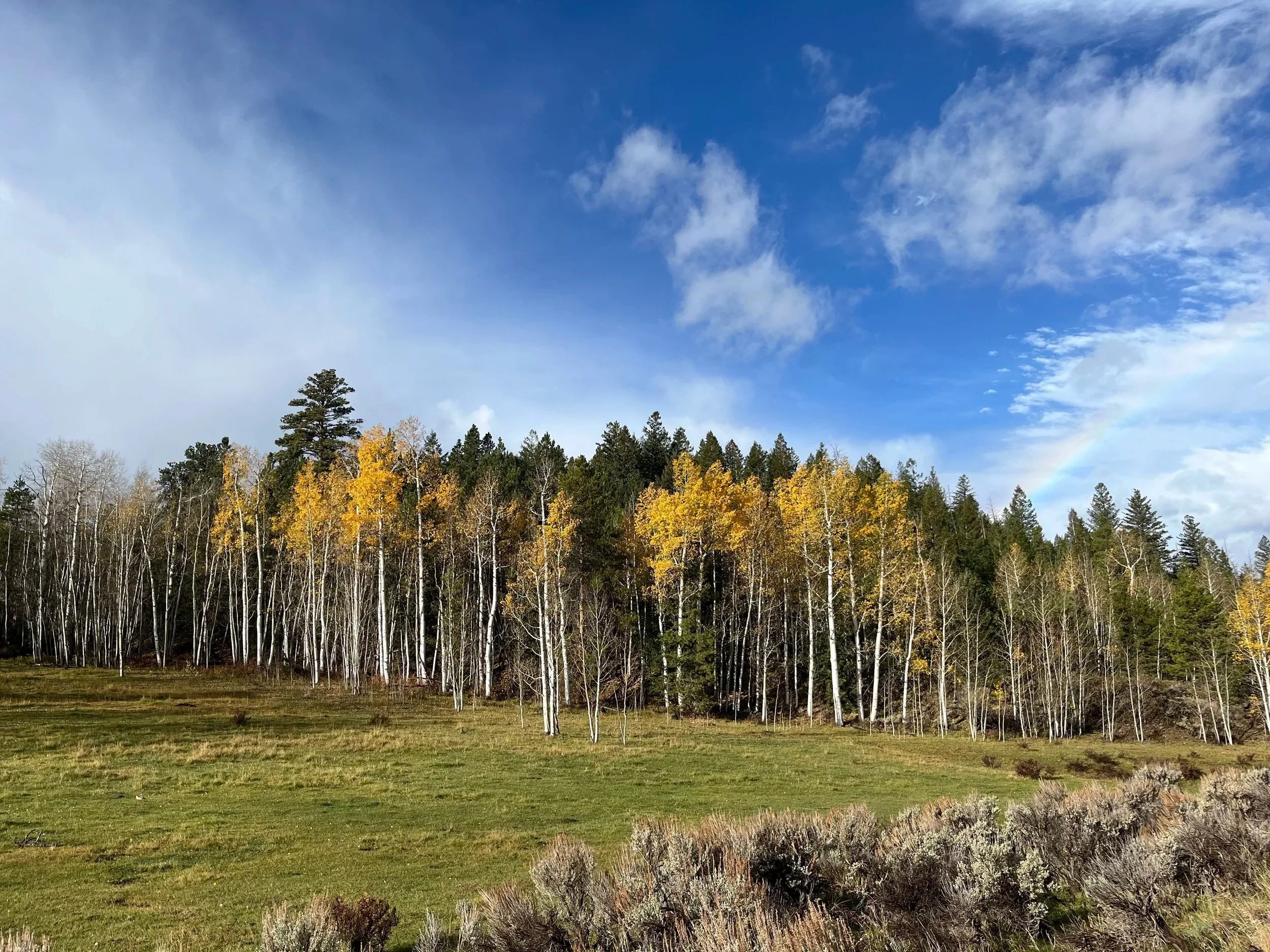
Processing Collapse Outpost: Uinta Mountains, Utah
Carvings in the pristine white bark of quaking aspen turn black as the tree heals from the damage. The raised marks almost seem to blister, creating dark, exaggerated wounds. Not surprisingly, heavily marked trees are often dead or in decline.
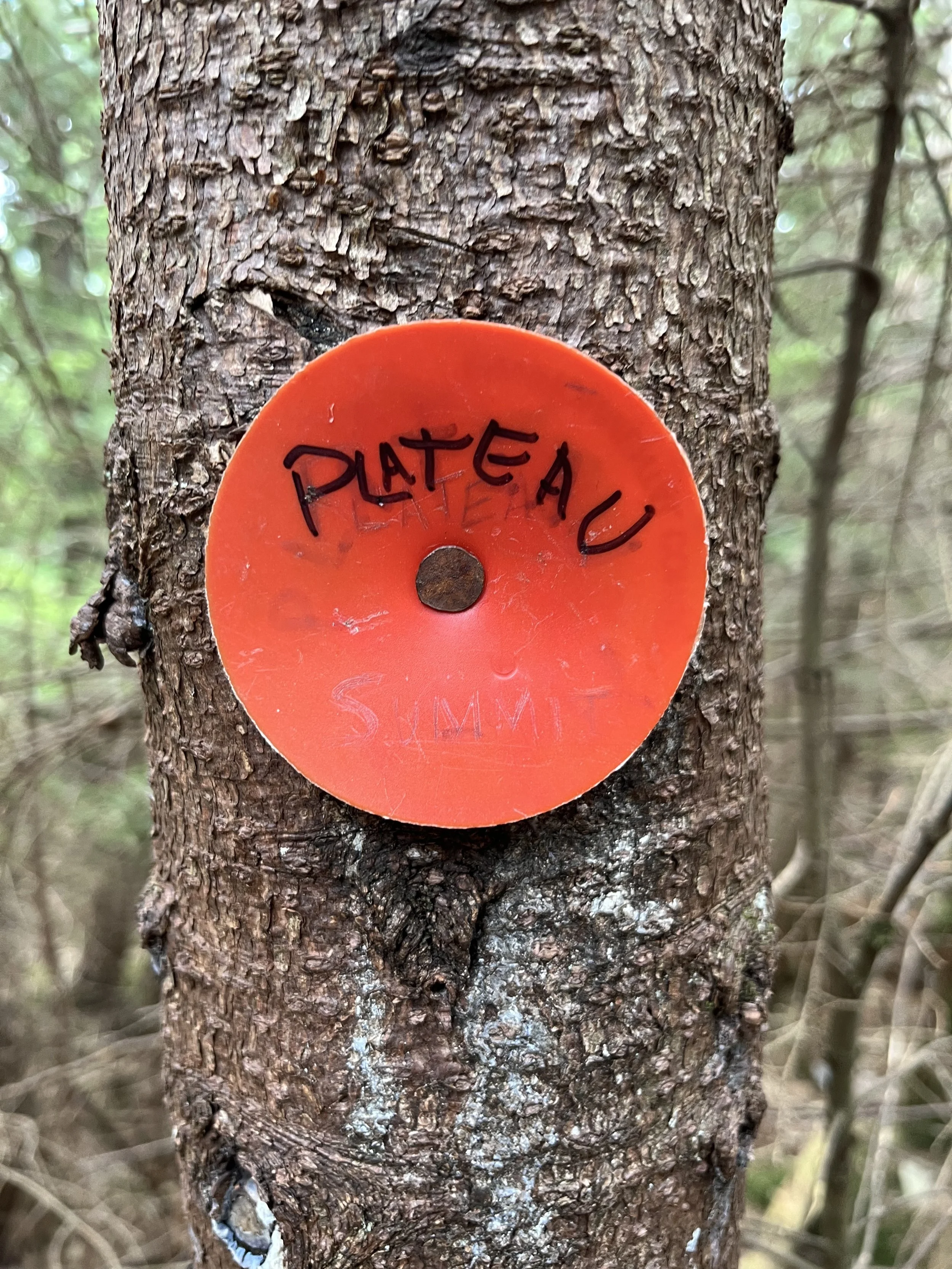
Plateau Mountain - High Peak #1
“To me, the summits are the norm, the comprehensible, the familiar, the simple. The valleys are foreign, mysterious, complex, threatening, and confounding.”
Michael Kudish, The Catskill Forest: a History
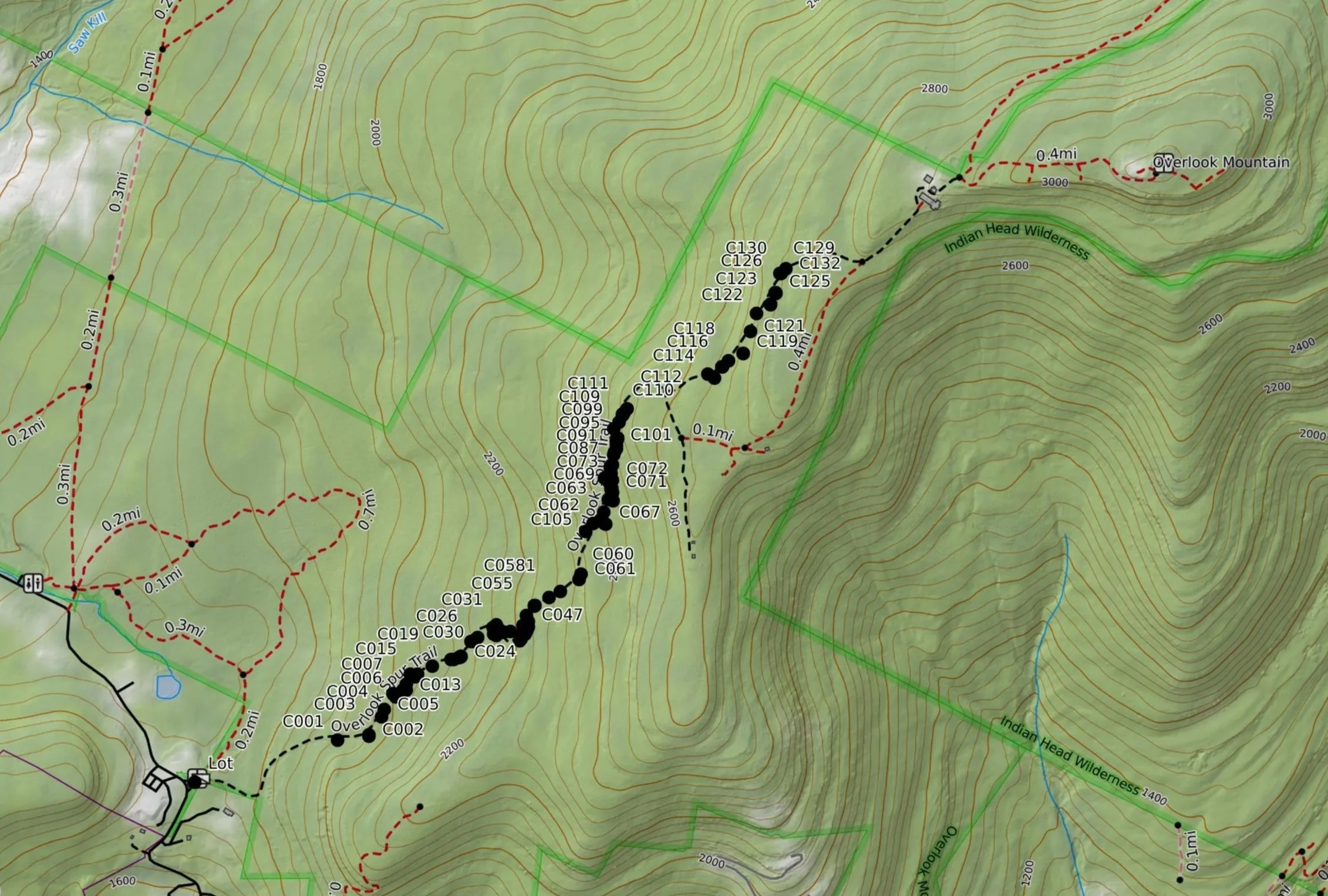
Mapping American Chestnut Sprouts on Overlook Mountain
It seems baffling that more attention is not given to how American chestnut persists throughout its native range.