One of the most significant discoveries we have made since beginning to look closely at American chestnut is that the tree is not as rare as we imagined.
Functional extinction has rendered wild chestnut trees nearly invisible in popular thought. Perhaps due to the species’ diminished stature and failure to produce viable nuts, the persistence of Castanea dentata alongside chestnut blight is more or less a footnote. Native chestnut is considered “lost” from our landscape in the Northeastern United States.
Yet, in protected New York state forests, we regularly find stump-sprouting chestnuts nestled in mountain laurel thickets. They are present, and at times abundant, in the understory. They are embedded in the ecosystem as small trees that are eager to reproduce clonally. We have also encountered chestnut growing in unexpected, unprotected places: namely, private properties.
In 2025, we became aware of a few chestnuts on a property adjacent to our studio in Accord, NY. These sprouts are growing on top of a ridge near strange, scraggly, and isolated mountain laurel shrubs. Laurel is not common in these woods. We wonder if the hill had once been dense with laurel—we normally see it growing in impenetrable clusters. What kind of event could have thinned those plants?
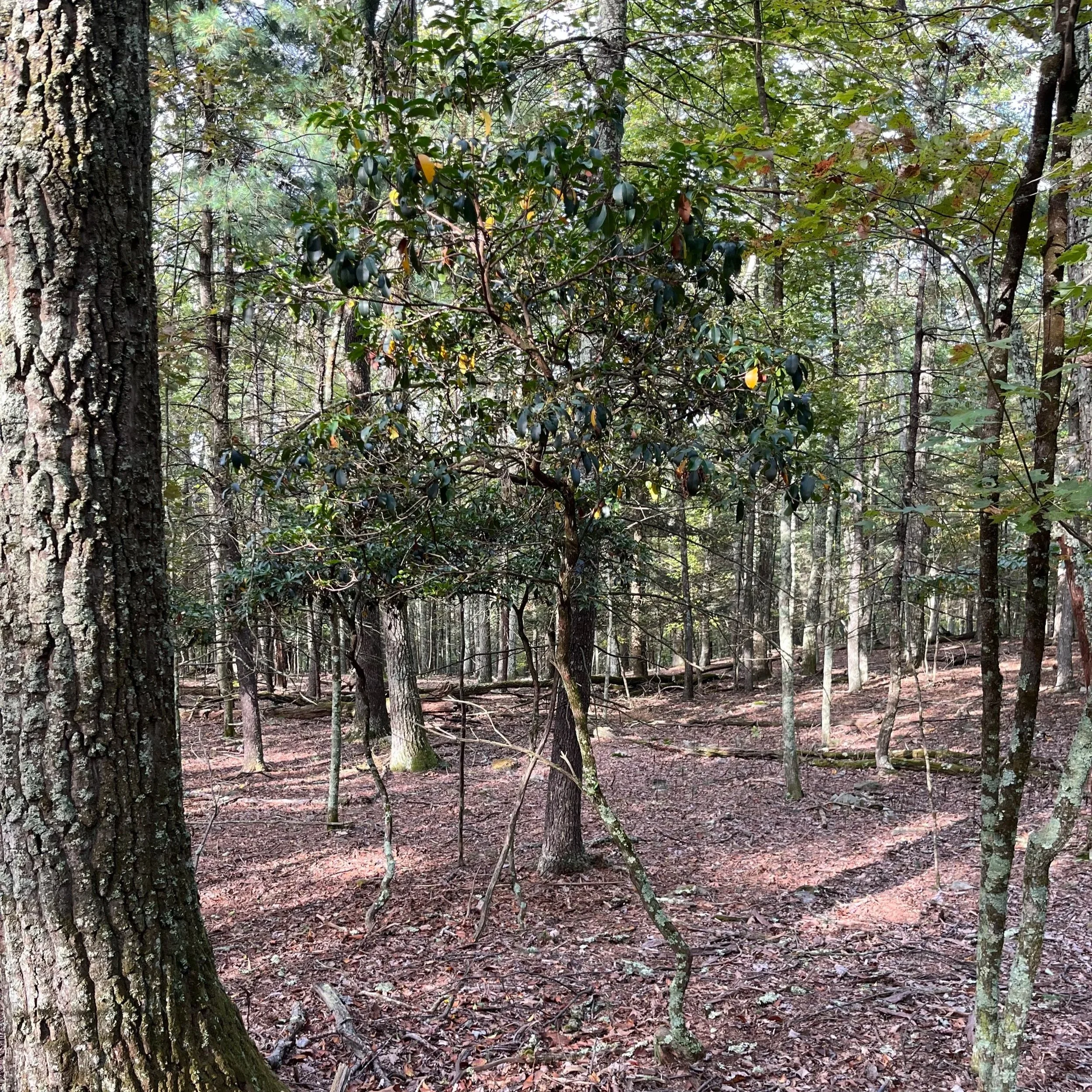
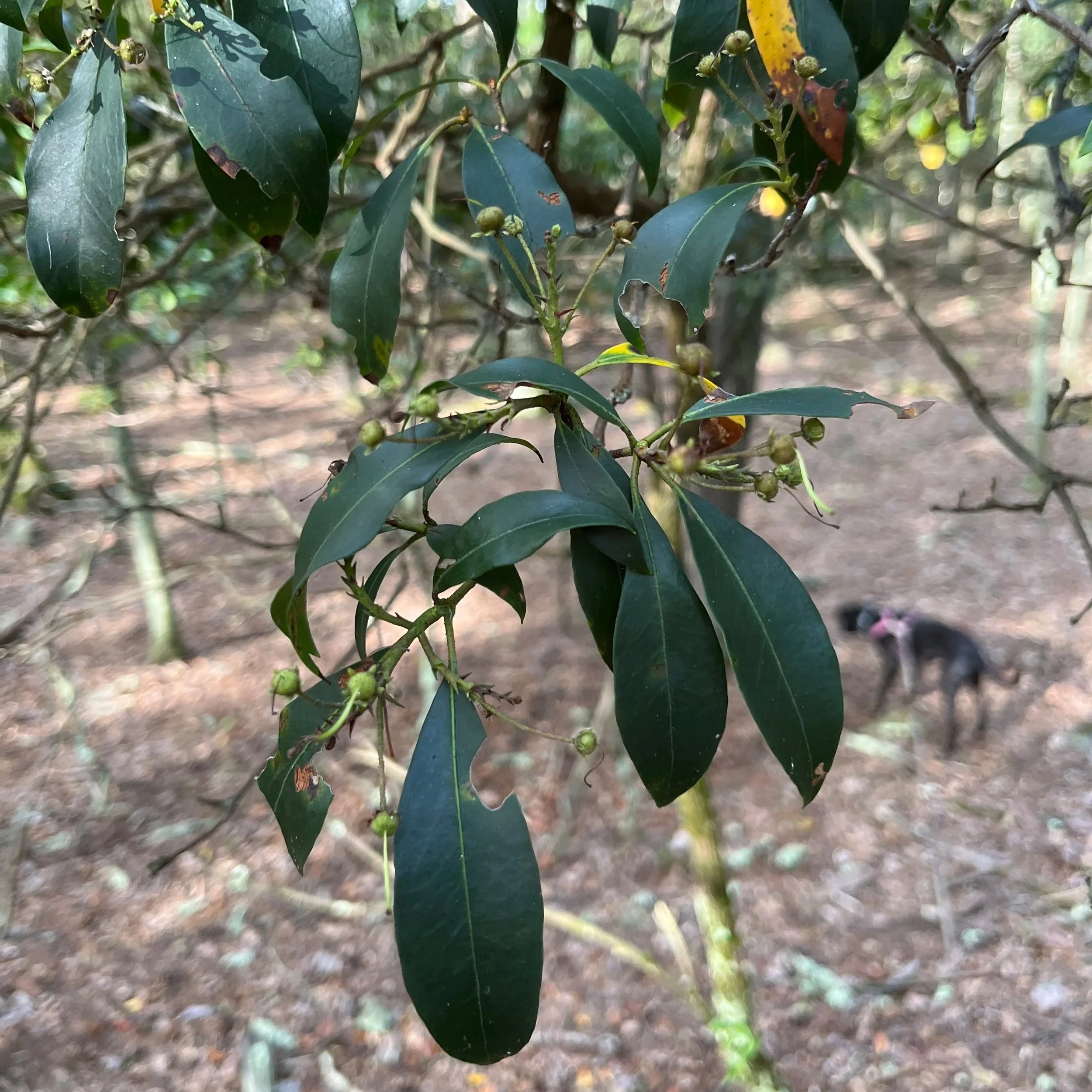
Above: Isolated laurel shrubs in Accord, NY woodland.
The associated chestnuts were tall, thin stump sprouts. We could see the remains of unsuccessful sprouting attempts at the base. Clearly, those shoots were browsed back by deer as fast as they could grow. Few saplings or leafy shrubs establish in the area for the same reason. Accord has an extremely large population of white-tailed deer. No one hunts them – the demographic of the surrounds has shifted away from a hunting population.
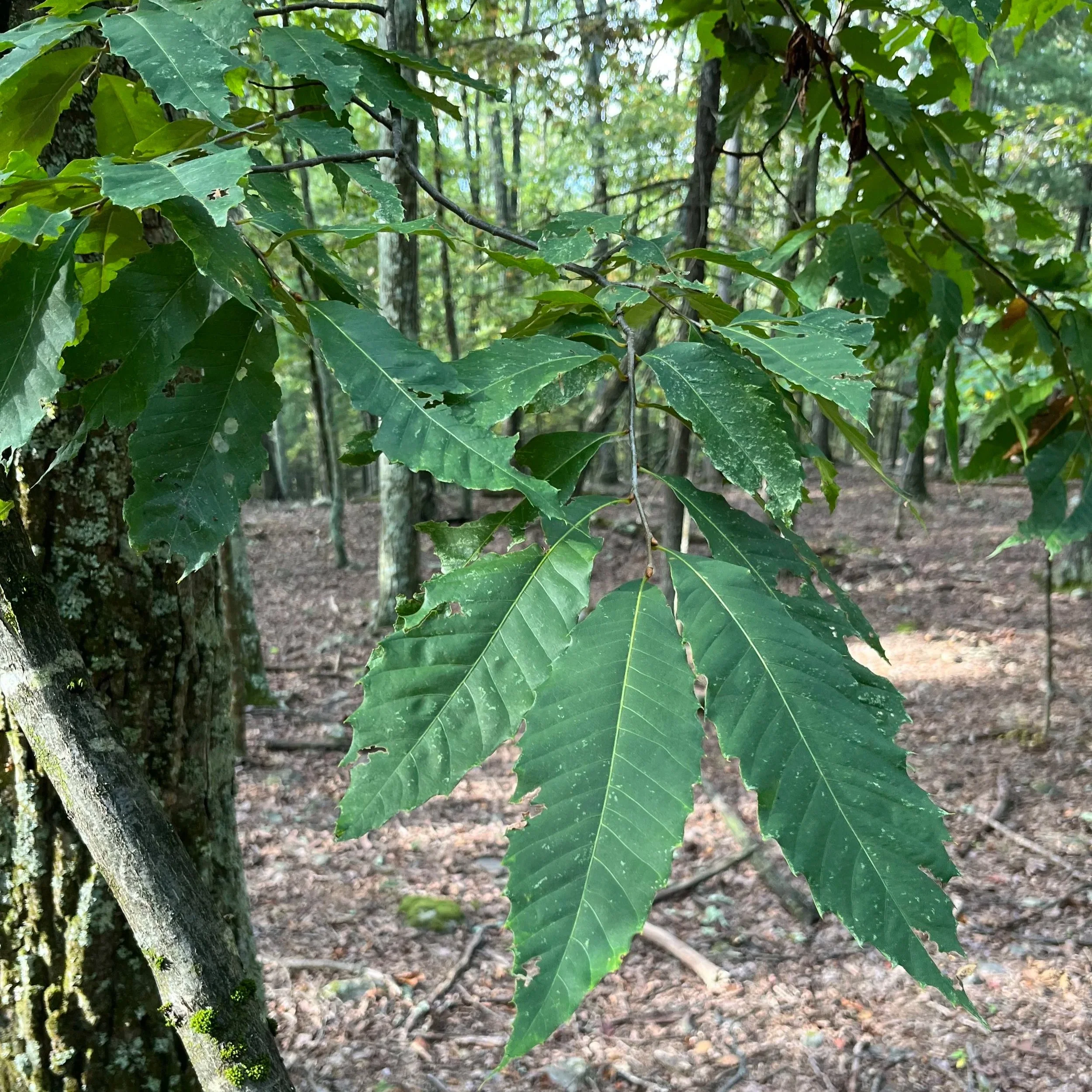
On September 29, 2025, we were amazed to find two American chestnut trees on the edge of our property with no nearby laurel at all. Both are near the bottom of a wooded slope adjacent to the road. Oak and hickory trees of various species make up the surrounding canopy.
Above: American chestnut foliage.
The larger of the two chestnuts measured around 4 inches in diameter near the base. Like the trees we noticed on the nearby ridge, a few dried, stunted shoots were present at the base. On our research sites (like Vernooy Kill Wild Forest, Overlook Mountain, and Mohonk Preserve), we typically find shrub-like chestnut sprouts with multiple trunks and active shoots with leaves. Here, only a single, small, robust trunk was growing.
The tree appeared to be about 25 feet tall with a nice full crown. We guessed it was about 20 years old at that size. We detected no evidence of chestnut blight: no cankers, orange pustules, epicormic sprouting, or branch dieback. There was a little damage on the lower trunk near the root, but the wound appeared well-healed. It surprised us that a blight fungus had not taken hold in that access point.
On July 4th, 2026, an extreme weather event toppled trees all around us. Although the entire county was hit hard, our road seemed to be at the center of a microburst. We estimate about 100 trees were lost on the property.
The roadside American chestnut described above was crushed by a falling chestnut oak. The trunk bent back until it half-snapped about two feet above the base, leaving a splay of splintered wood.
The initially shocking loss provided the perfect opportunity for a coppicing experiment. We have been curious for years about the practice of intentionally cutting trees to promote vigorous new growth. For vulnerable species like ash and chestnut, we’ve wondered if coppicing might allow trees to persist longer than they would otherwise. A white ash sapling we cut in 2024 is boasting impressive boles today.
But— in spite of the hotspots we’ve discovered—American chestnut is a special find in our woods. Since it almost never reproduces through seed in the wild, we felt extra reluctant to risk the continued life of an existing sprout. It’s rare that we cut down any living tree, period; we prefer to work as foragers and scavengers in our landscape.
In this case, however, a controlled cut seemed like a helpful intervention. We would create a fresh start for the stump with minimal damaged wood available for intrusion. Any new growth would be protected from deer browse with a cage. We were also eager to harvest some of the downed wood to use in an American chestnut leaf sculpture for the Woodstock Library.
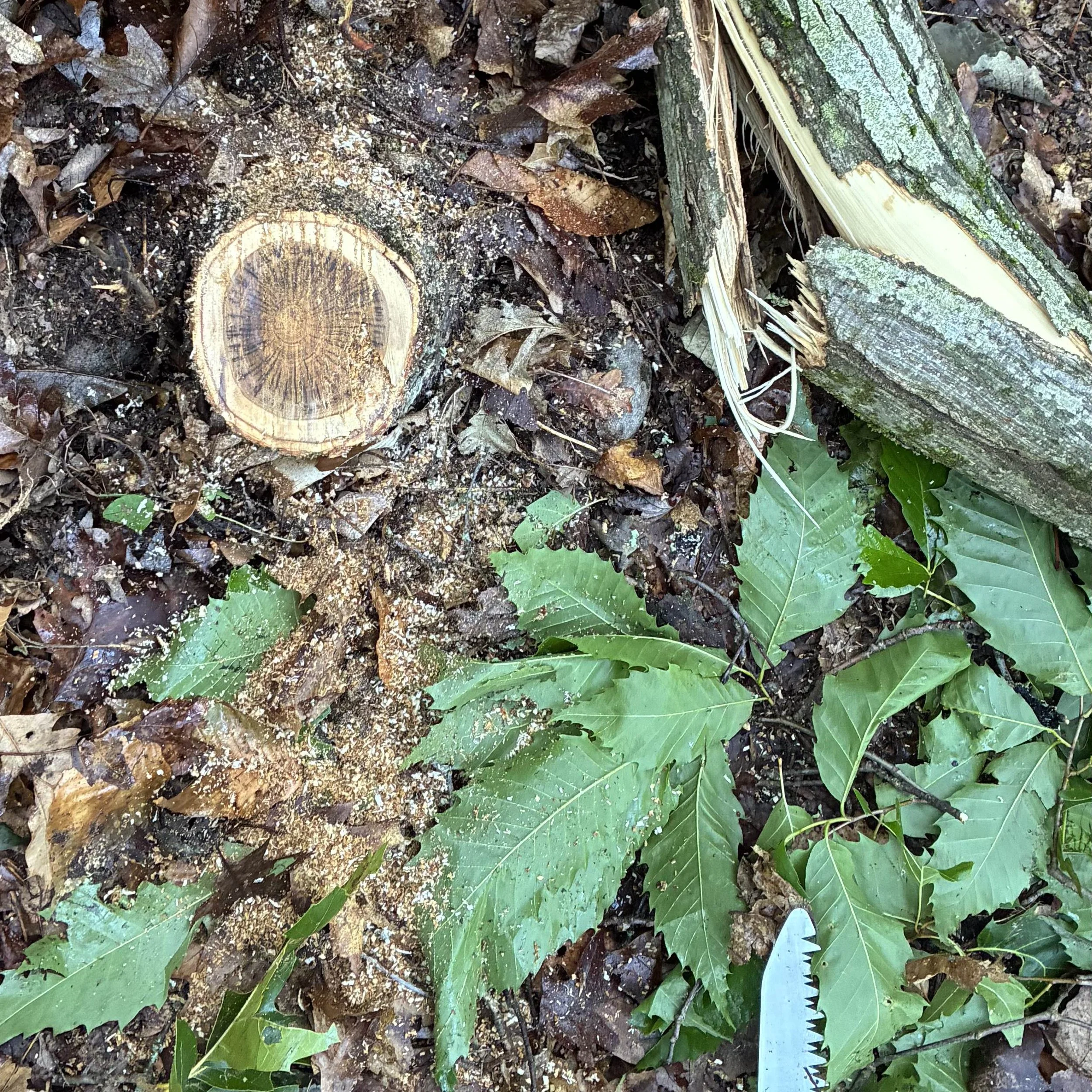
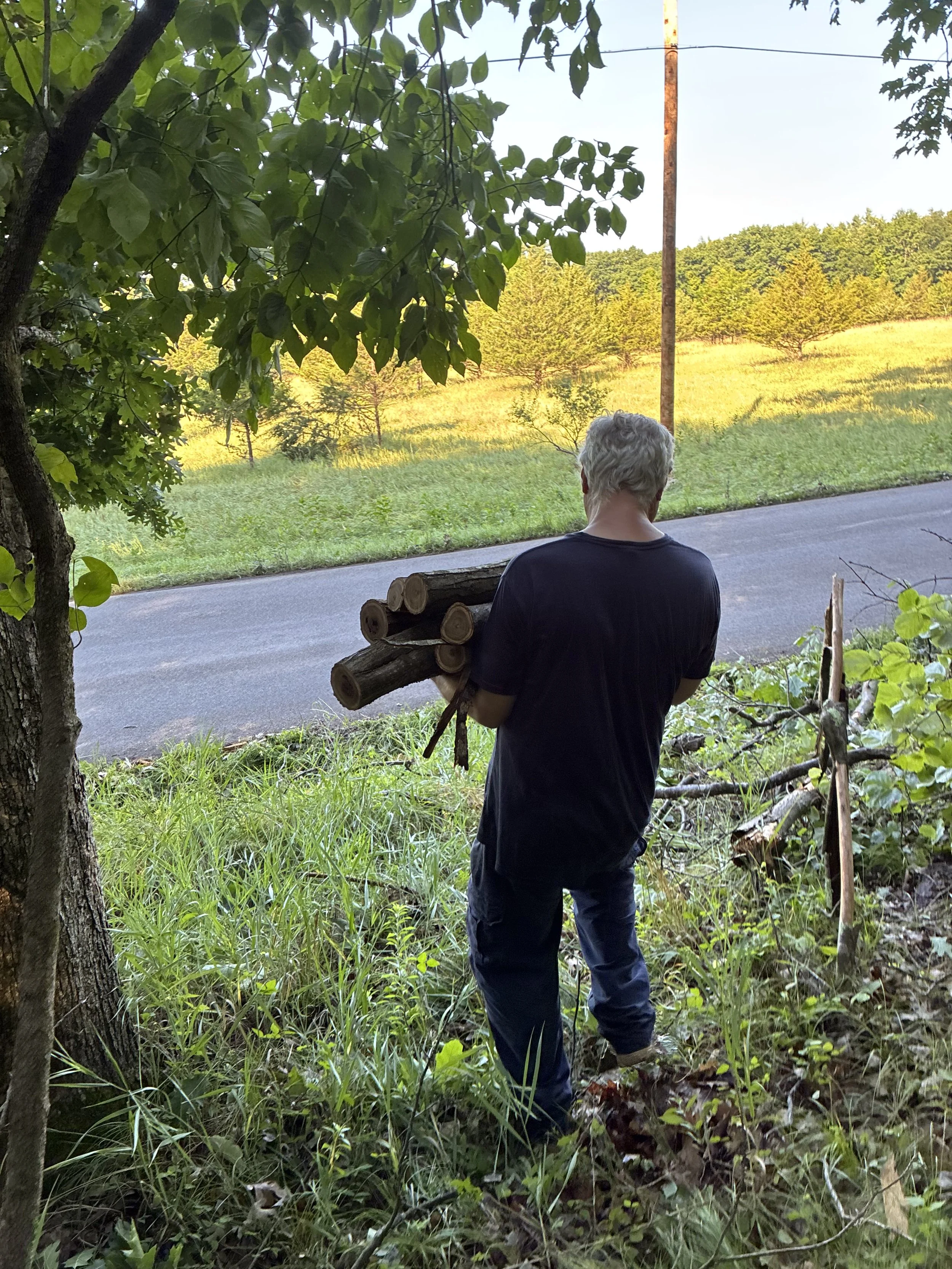
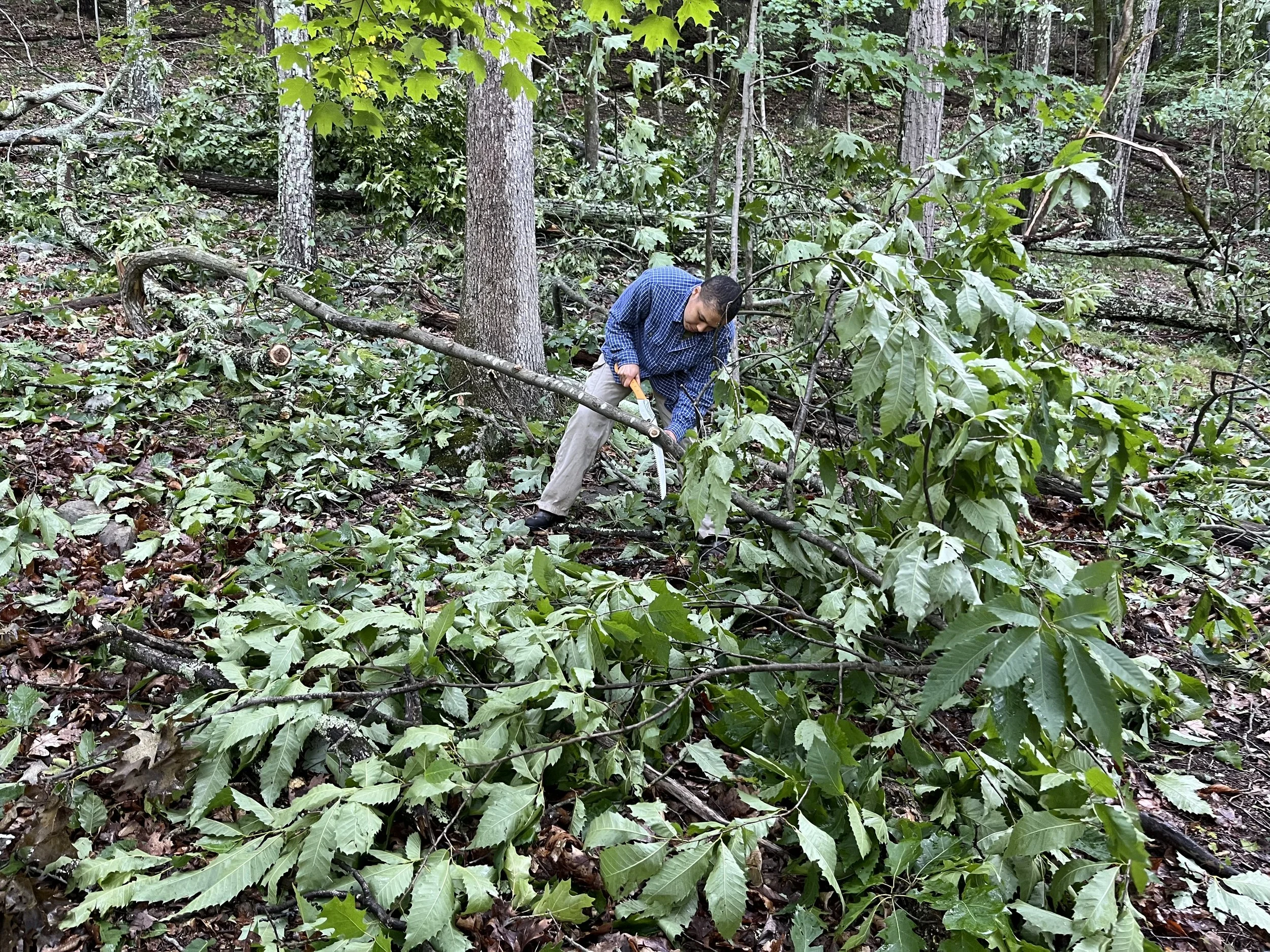
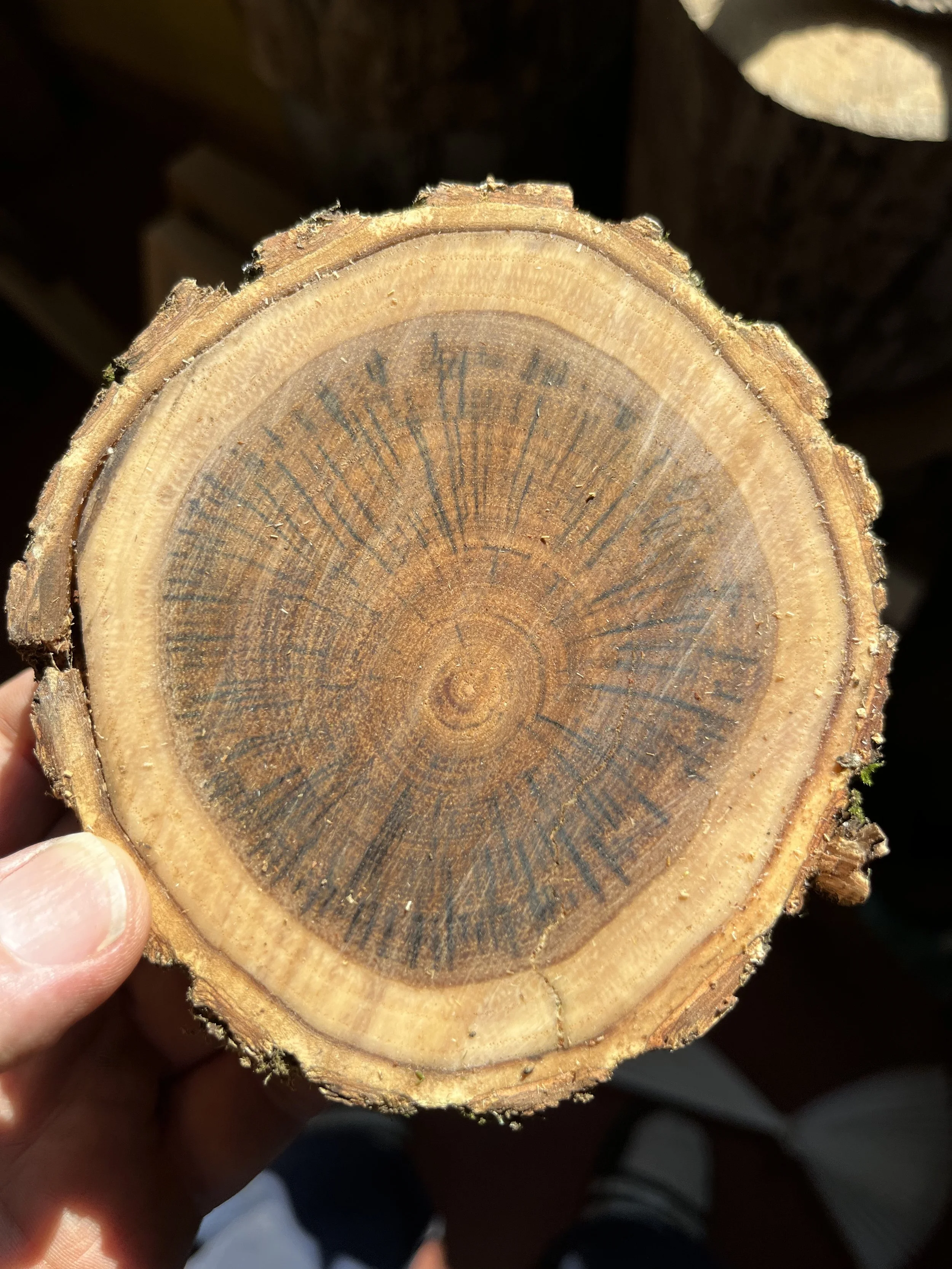
A few days after the storm we cut the tree a couple of inches above the ground. We made two fascinating discoveries:
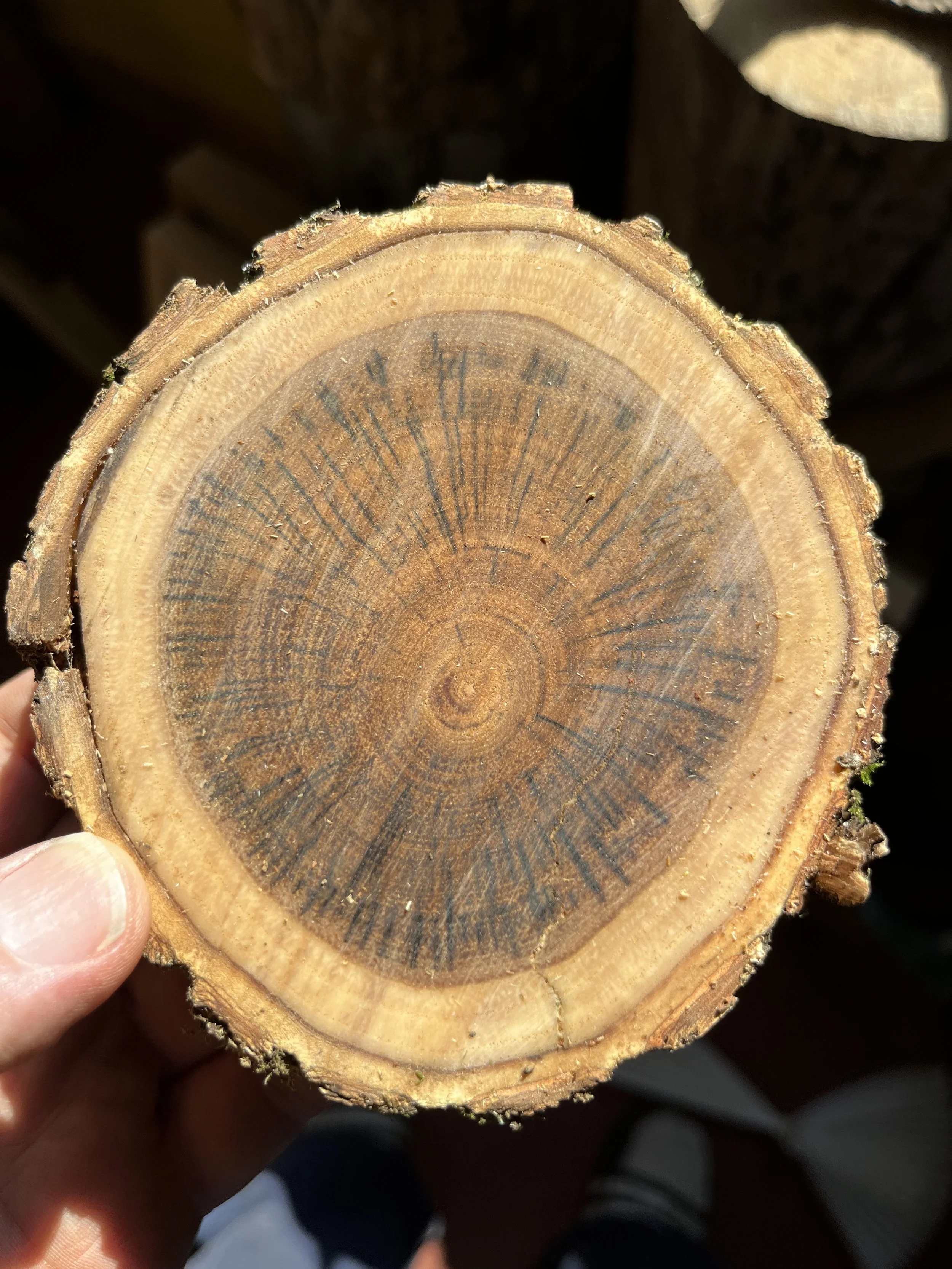
One, the growth rings were super tight! This small tree was 47 years old, according to our count. That means it emerged in 1979. Clearly, on that dry slope, the tree had been growing extremely slowly. Our 20 year guess was way off.
Two, the wood was spalted. An infection of some kind had found its way into the old injury near the base of the trunk. When and how had that occurred? Wouldn’t chestnut blight, which we understand to be continually present all over Northeastern forests, have entered too?
A timeline of regeneration:
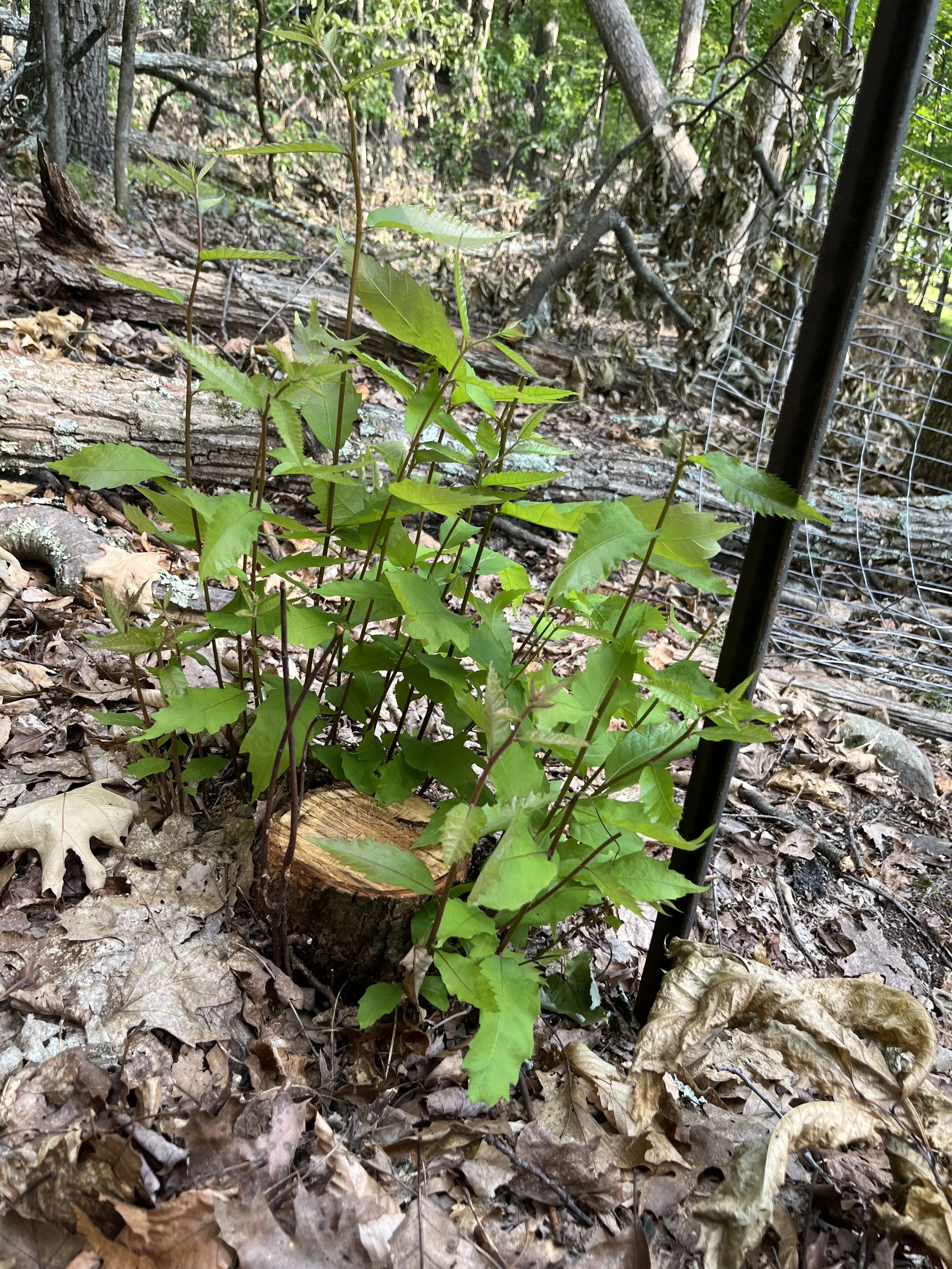
We coppiced the snapped tree on July 8th, 2026. The bole measured approximately 20 feet in length. We placed a narrow, five-foot tall wire cage around the stump. We cut and collected the chestnut logs and branches.
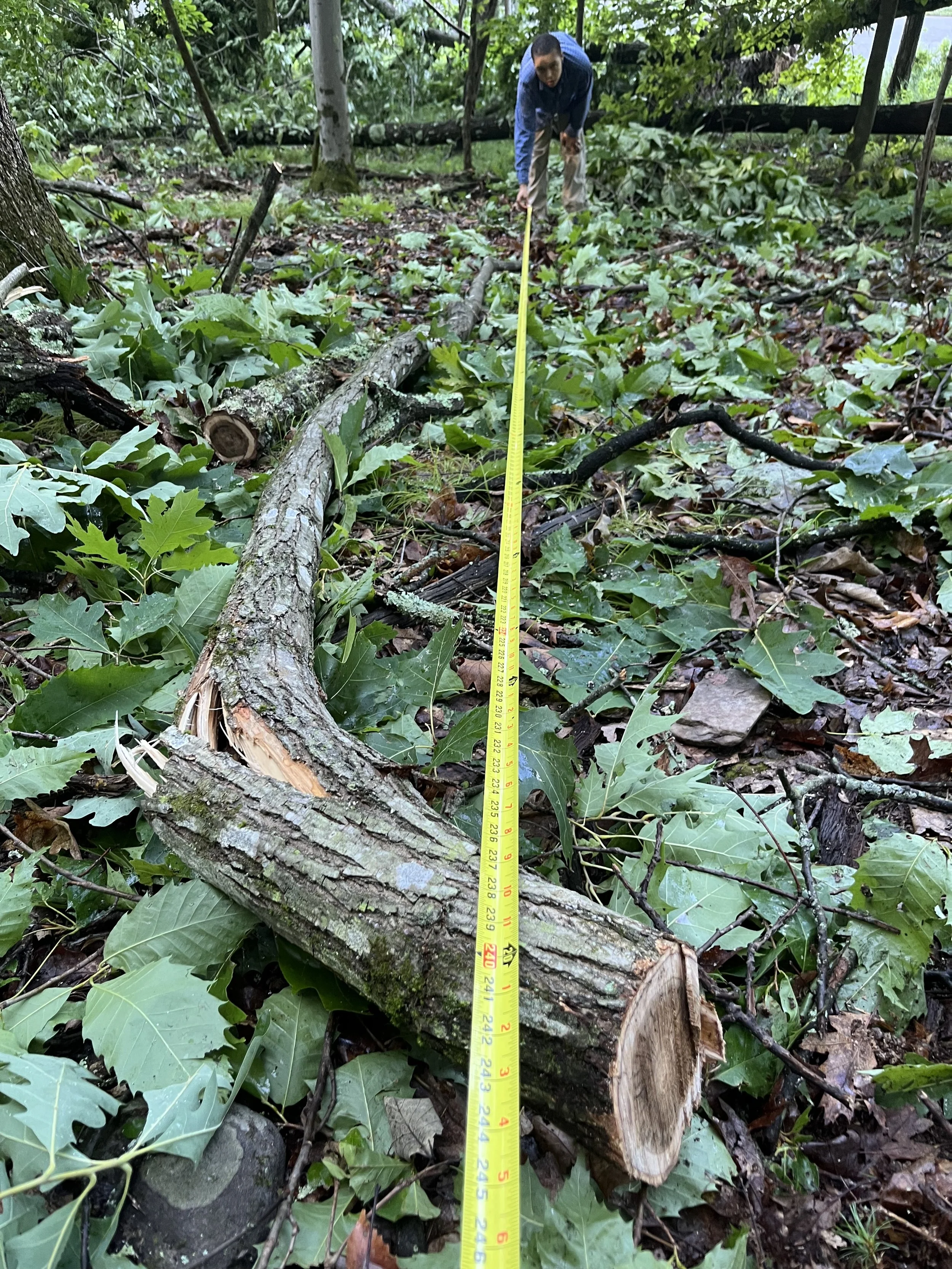
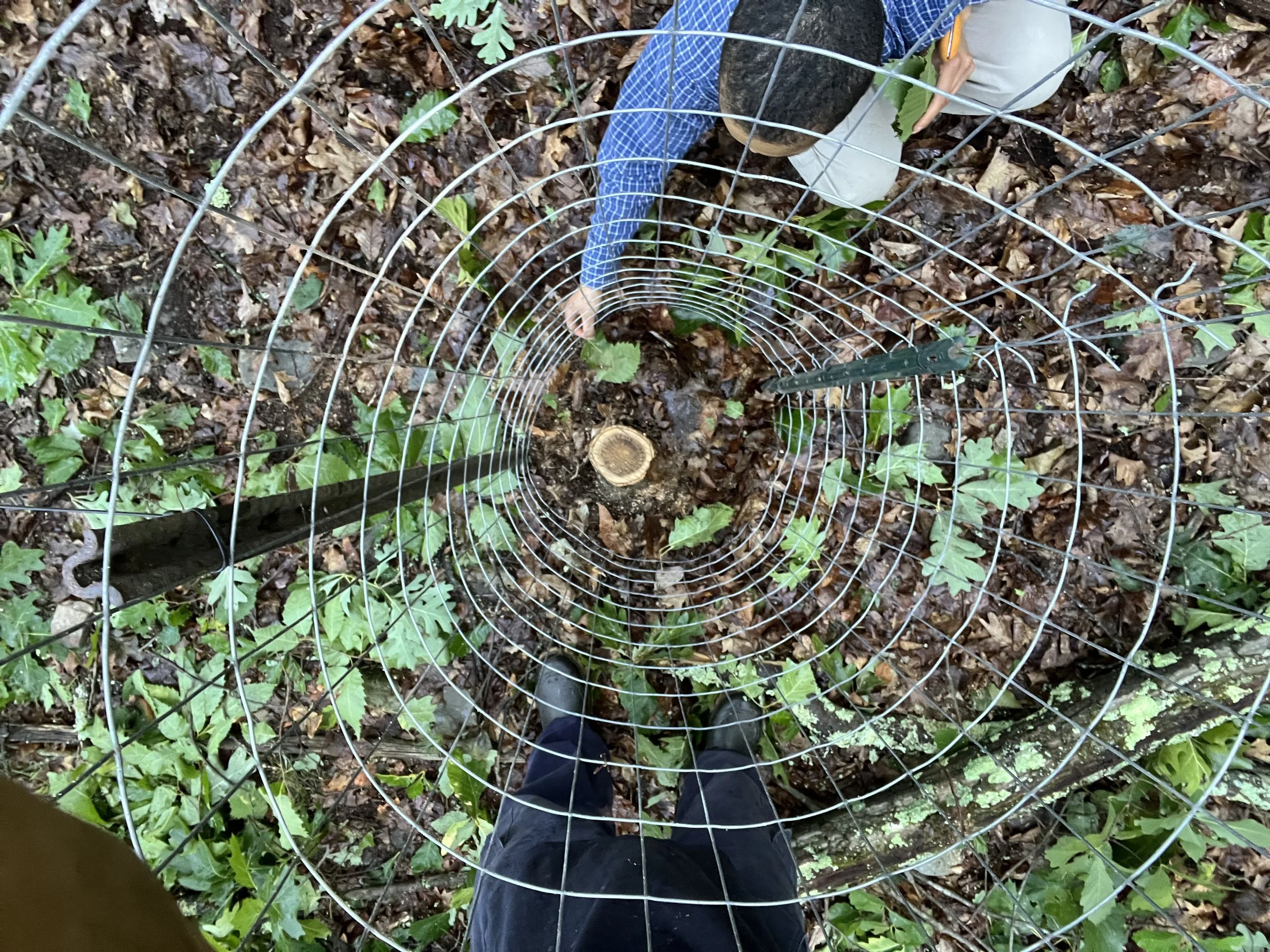
On July 15th, we noted sprouts emerging from the earth directly adjacent to the stump.
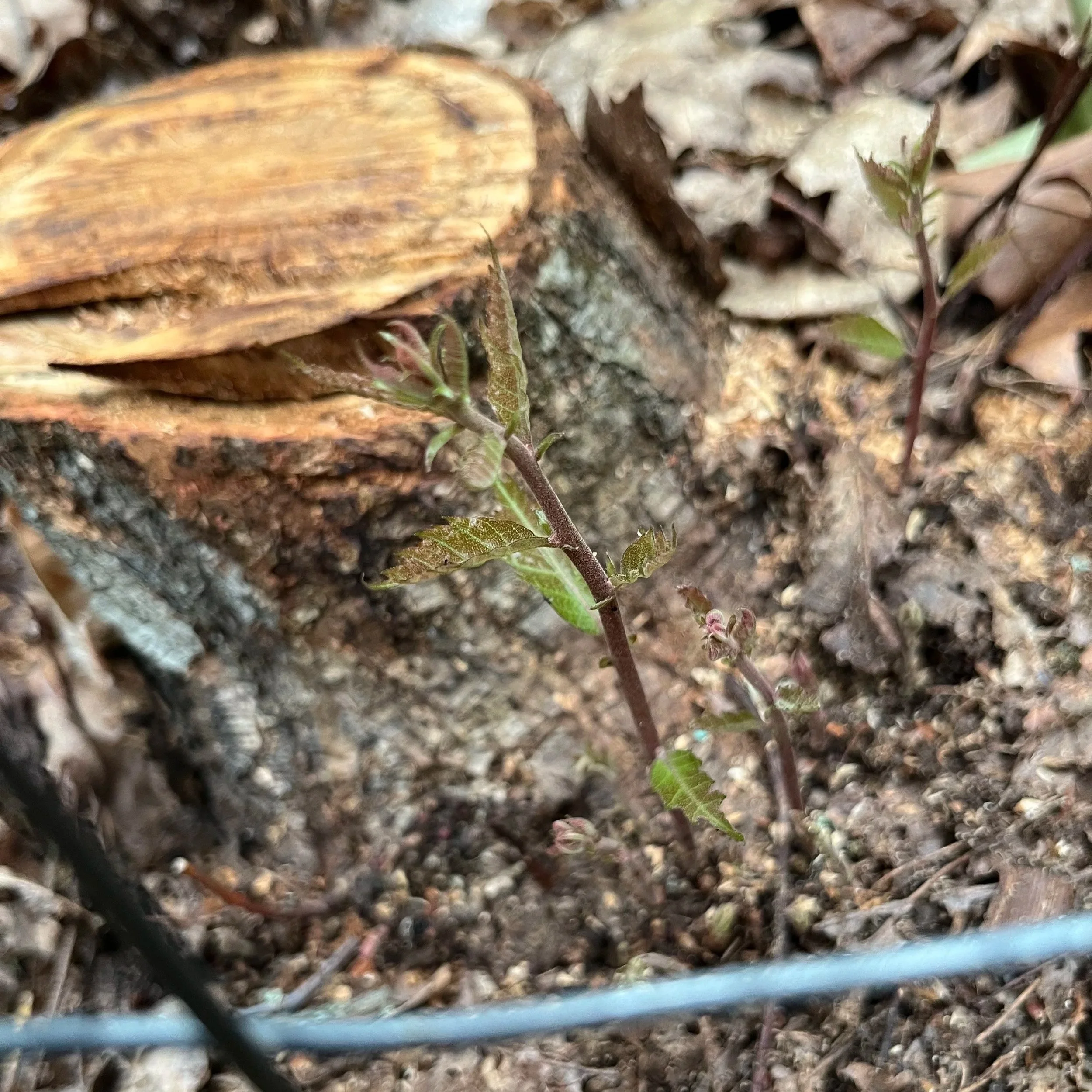
On July 17th, a few more sprouts appeared. The larger ones had reached one foot in height.
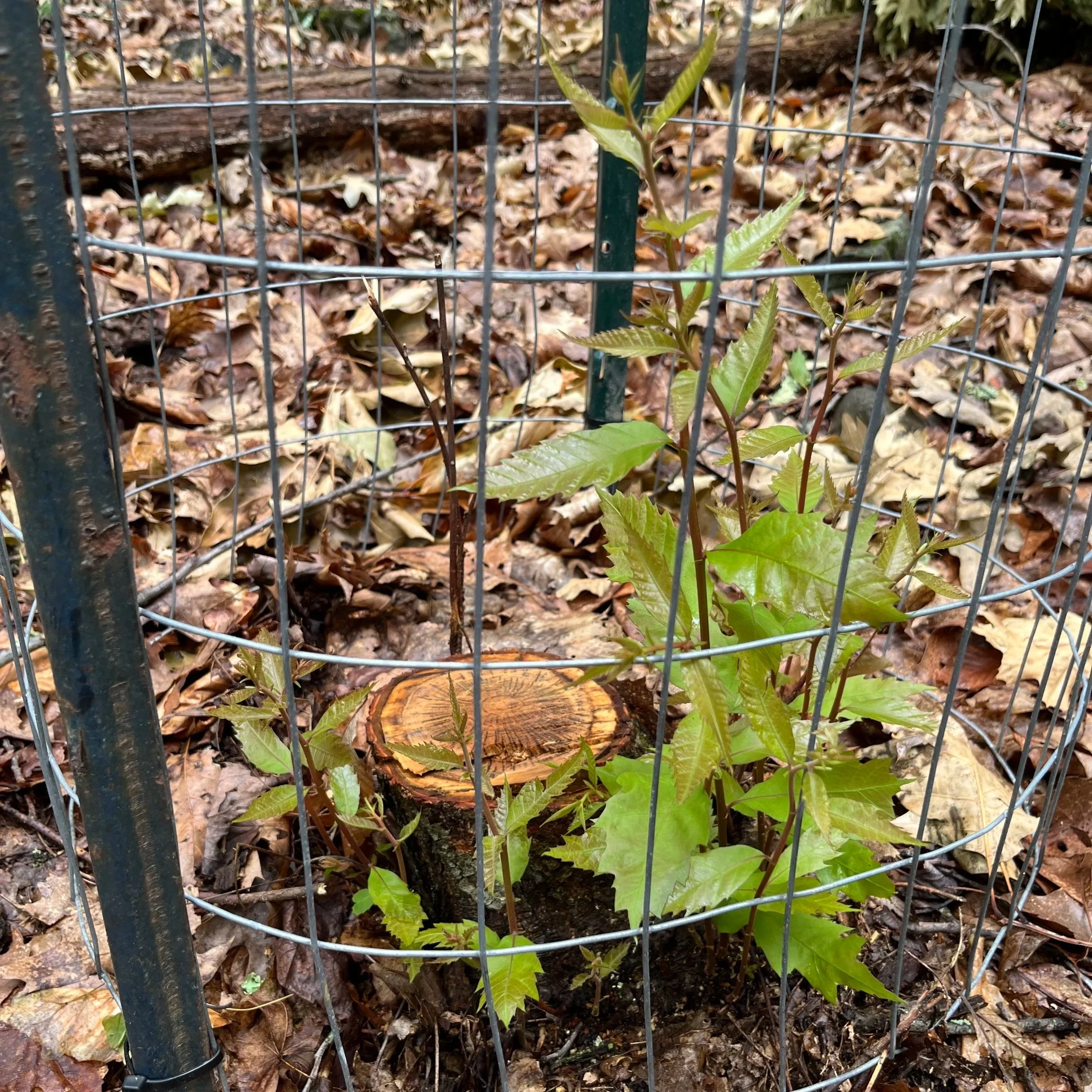
On July 27th, we found that many of the shoots had begun to extend out of the cage and were being eaten. We replaced the cage with a wider one.
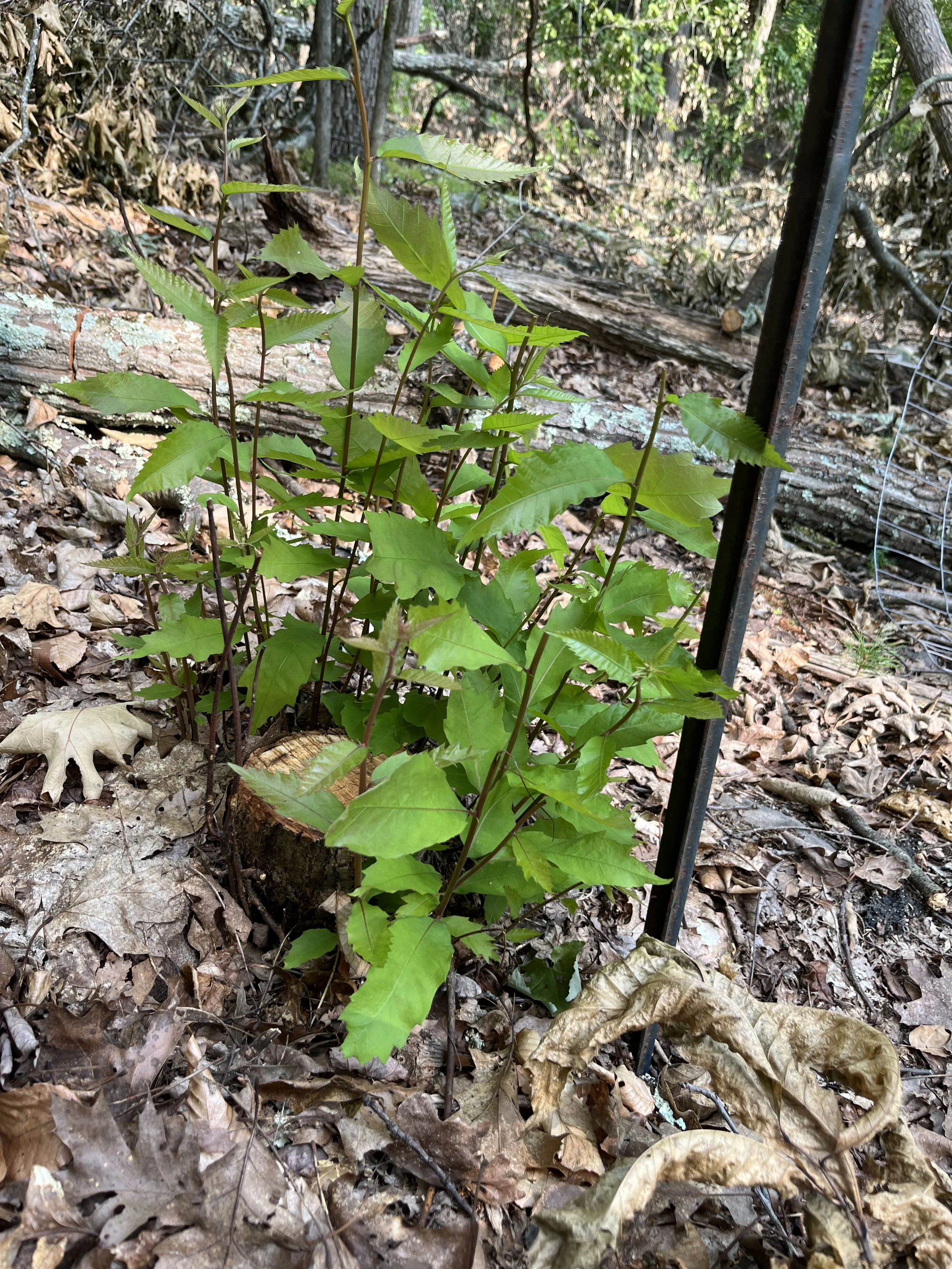
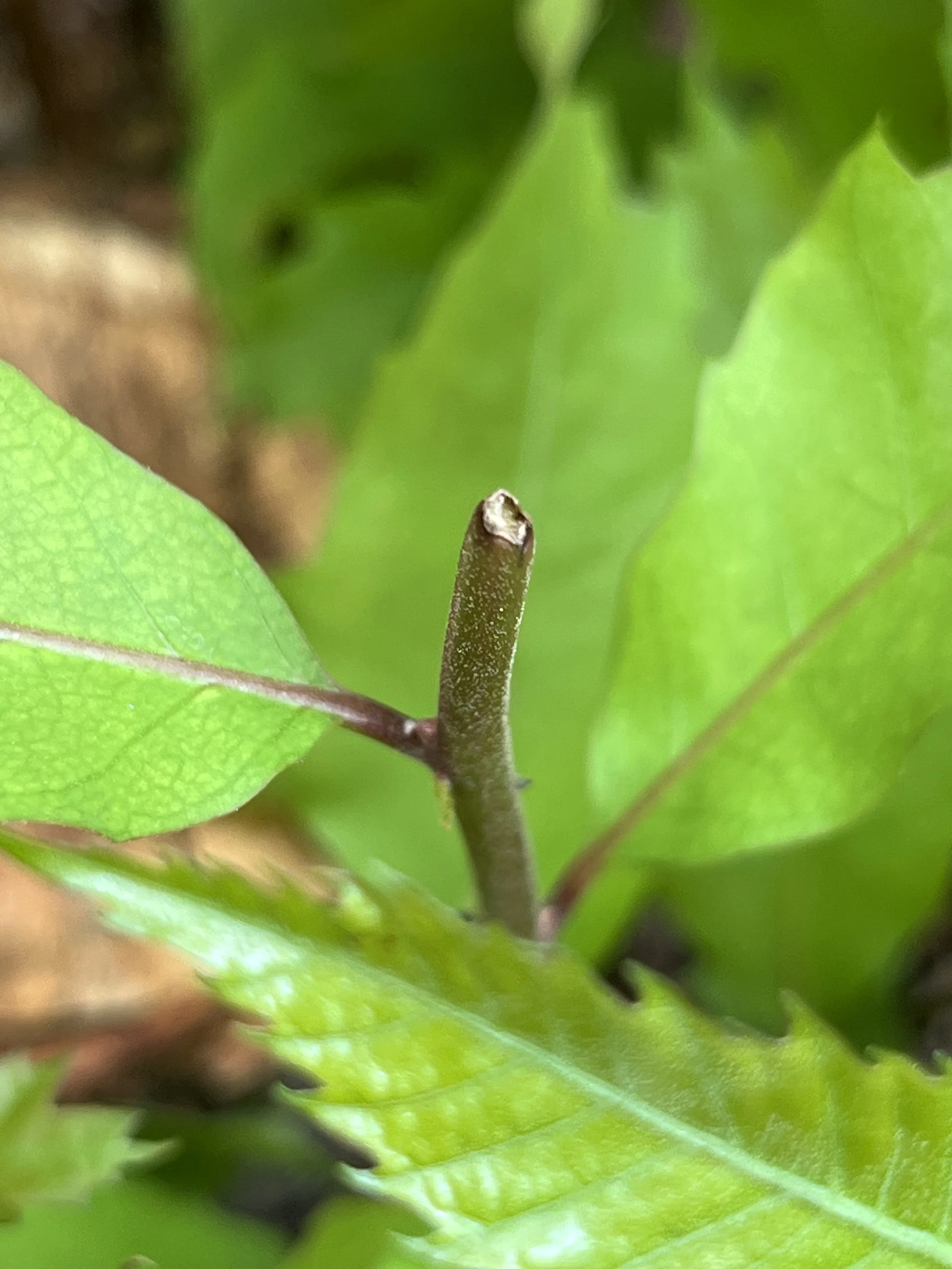
By August 11th, the leading sprout was nearly four feet tall! The tree had become a verdant little bush.
On September 5th, the leader had nearly reached the top of the cage. Leaves and sprouts were once again sprawling beyond the perimeter. We could see bite marks within the cage, too. Deer must have yanked the edges of leaves out of the bounds as they ate, consuming as much as they could possibly reach. The tree can only spread as widely as the cage does before being halted by browse.
Not much changed between October and November, as the growing season came to an end. The photo below was taken on November 5th, 2026. The chestnut leaves are just now yellowing while surrounding trees have already passed their peak autumn foliage.
A whole range of questions open up with this experiment:
This tree had lived, seemingly blight-free, in the understory for almost half a century and there was no evidence of flowering or past fruiting. Does a chestnut sprout require a major canopy opening to produce catkins? Each of the four trees we’ve discovered with catkins and burrs are situated in direct sunlight.
Will the new leader grow wildly since so many surrounding trees have fallen and the canopy has opened? Should we keep it clear for this one chestnut, or allow the cage and coppice to be the only interventions we make?
The tree was isolated and could not sustain new root collar sprouts because they were immediately eaten by deer. This is also true of the still-standing chestnut near the road, and nearly every tree we have seen outside of mountain laurel patches. Does that mean the crushed trunk pre-dates the moment when deer browsing exploded? Could this growth form be a timestamp, of sorts, for the white-tailed deer population boom?
On that note, would this chestnut have died entirely if we hadn’t caged it after coppicing? It seems like almost no tree regeneration can occur in this forest without protection. How long would it take for the chestnut’s root system to lose its remaining energy and perish, without any viable leaves to perform photosynthesis? Or are the roots finding sustenance through underground networks?
What will we learn from the sprouts? What can we make with them? Should we cut smaller sprouts at the end of the season to work this tree for poles?
How will the growth patterns of the caged tree compare to wild chestnuts we are watching in other locations?
We are beyond excited to continue tracking this tree over the coming months and years.